Why Measure in Process?
Why measure in process? To get real-time results!
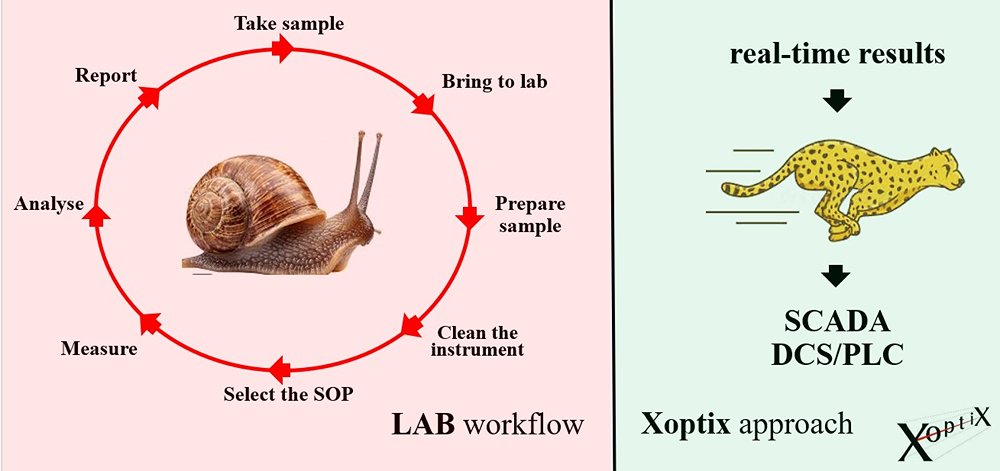
Real-time feedback is key for modern process control. Traditional laboratory particle size analysis is slow. Samples must be collected, transported, prepared, measured, analysed, and reported before any process adjustment can be made. By the time results arrive, the process may already have changed. Inline PSD measurement transforms this workflow from delayed reaction to real-time control, giving operators instant visibility of process behaviour. Instead of waiting for lab results, plants can respond immediately, reducing downtime, minimising waste, and improving process stability.
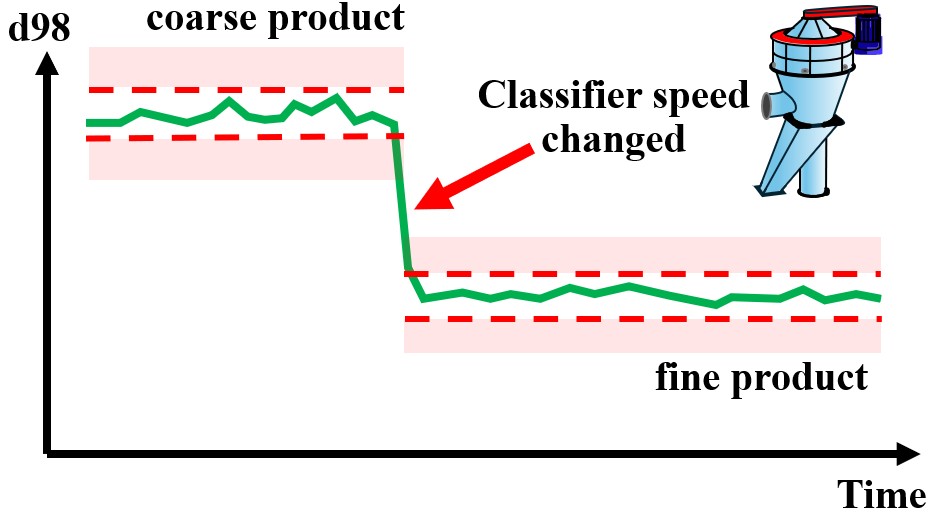
A change in classifier speed immediately affects the particle size distribution of the product. In this example, reducing the classifier speed causes the product to become finer, which is reflected by the sudden drop in the d98 value. With real-time inline PSD monitoring, this process change is detected instantly, allowing operators to respond immediately and maintain product quality within specification. Without continuous PSD measurement, such changes may remain unnoticed until delayed laboratory results become available, leading to off-spec material, wasted energy, and process instability.
Reproducibility matters!
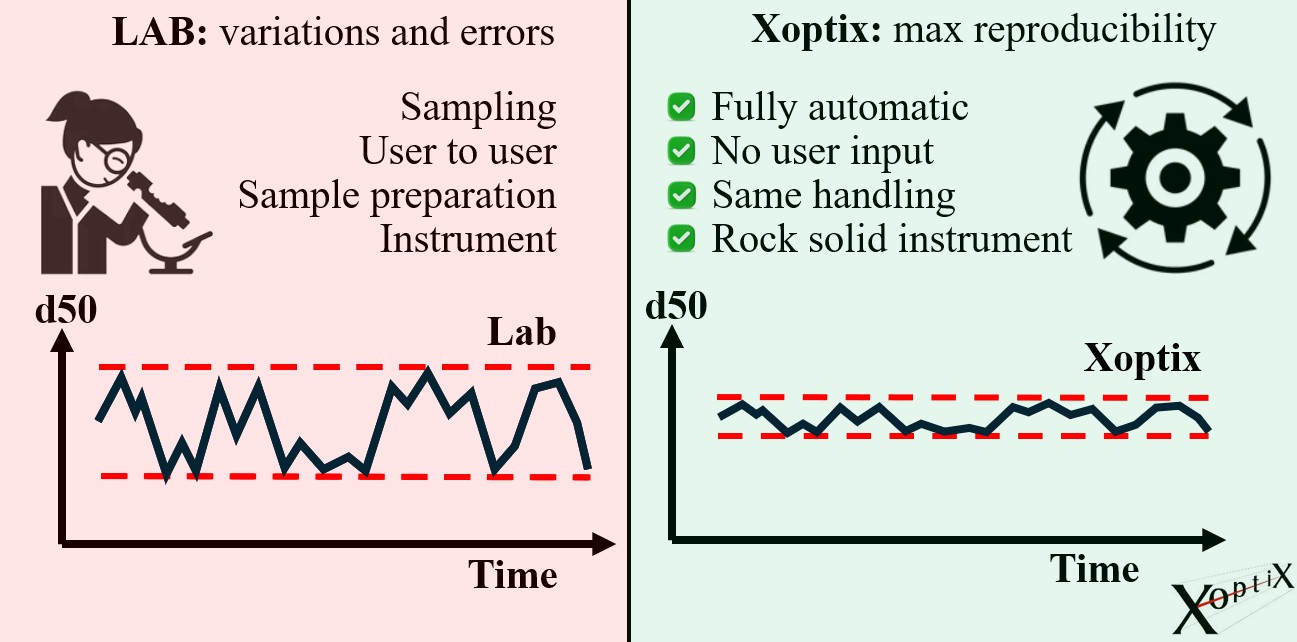
Laboratory measurements often suffer from variation caused by manual sampling, inconsistent sample preparation, operator handling, and instrument differences. Inline systems eliminate many of these variables through fully automatic and repeatable measurement procedures. Continuous in-process monitoring provides highly reproducible PSD data with no operator influence, allowing plants to make decisions based on stable and reliable information rather than inconsistent laboratory results.