
Finished Cement
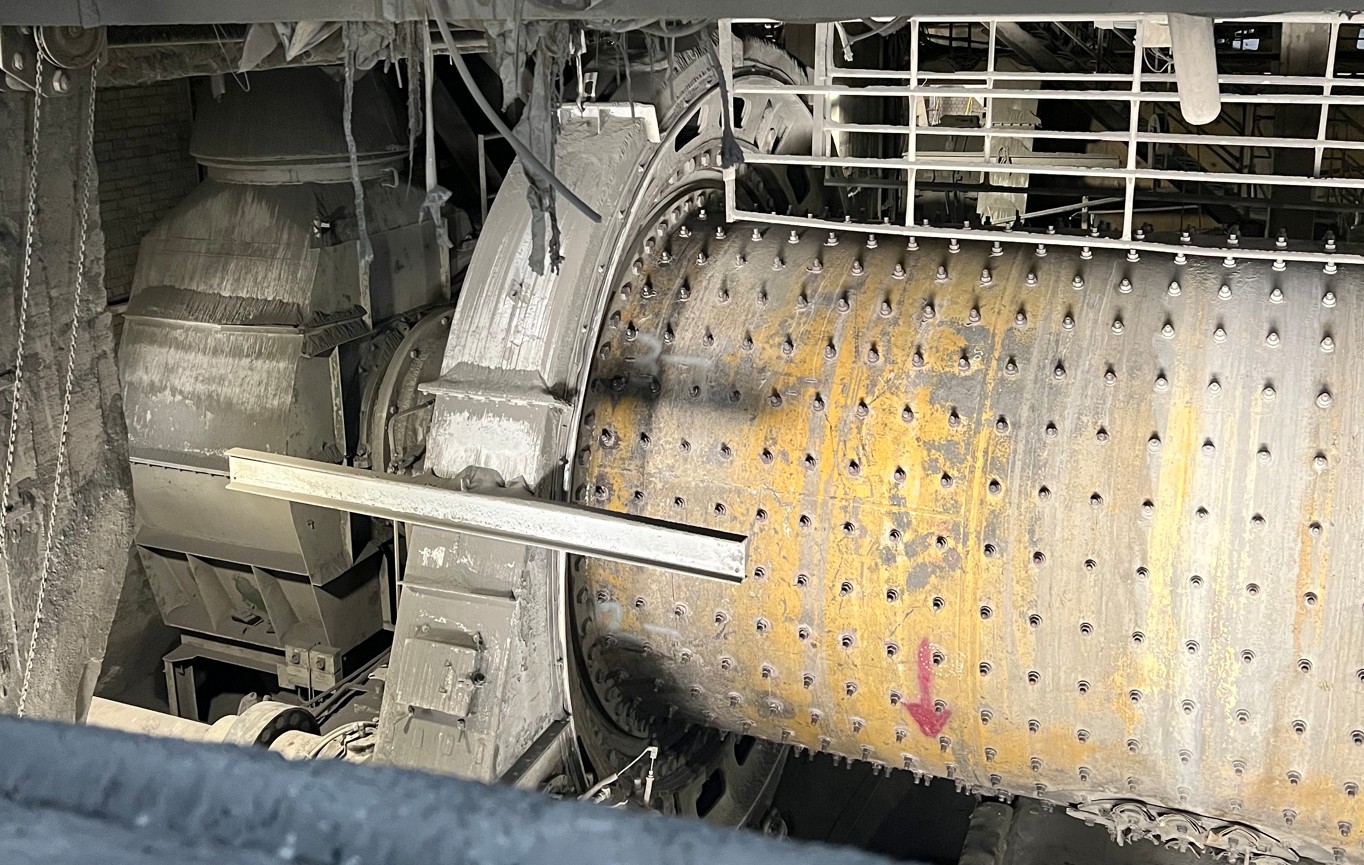
Finished Cement Mill - Cement Grinding
Finished cement grinding is one of the most important stages in cement production, as it directly determines the final product quality delivered to the customer. Particle size distribution strongly influences cement performance, including strength development, workability, setting characteristics, and consistency. Even small variations in grinding conditions can have a significant impact on the final product.
Modern cement plants often produce multiple cement grades with different fineness requirements. Maintaining a consistent particle size distribution while coping with changing clinker properties, varying additives, and fluctuating process conditions can be challenging. Operators must balance product quality, production rate, and energy consumption simultaneously.
Traditional quality control relies heavily on laboratory measurements performed at relatively infrequent intervals. Between these measurements, operators have limited visibility of what is actually happening inside the grinding circuit. By the time a laboratory result becomes available, large quantities of material may already have been produced outside the desired specification.
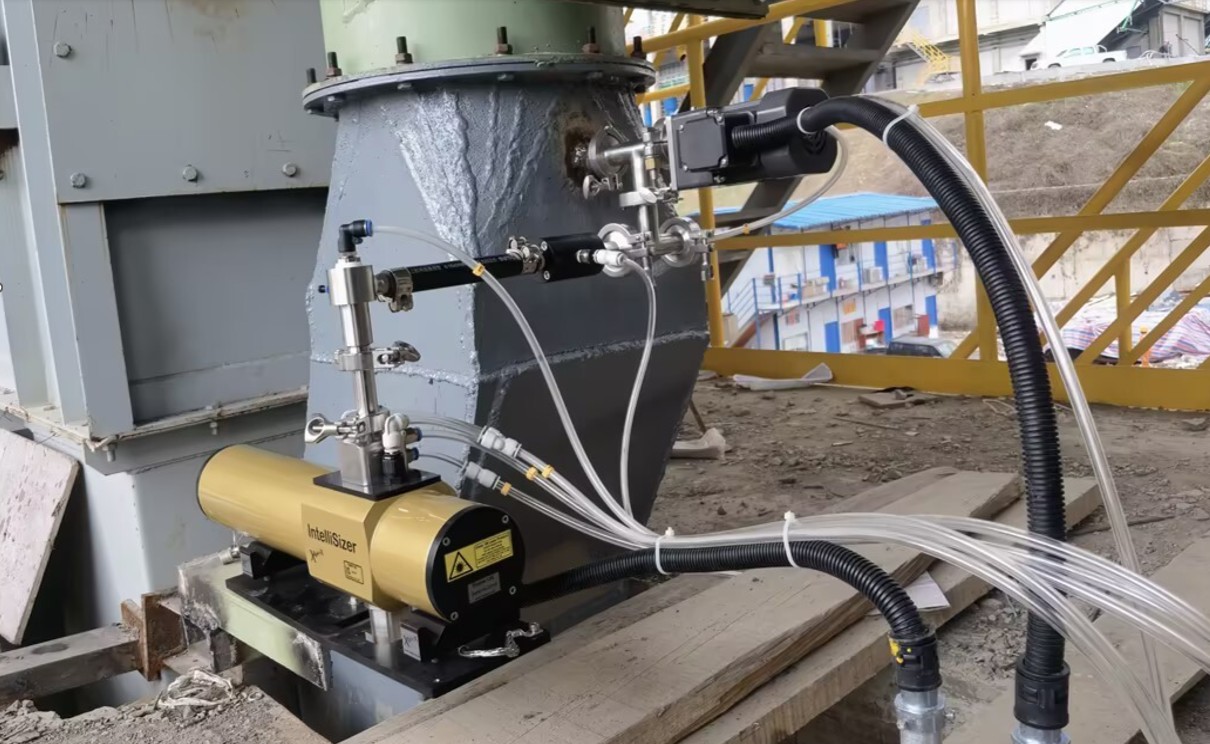
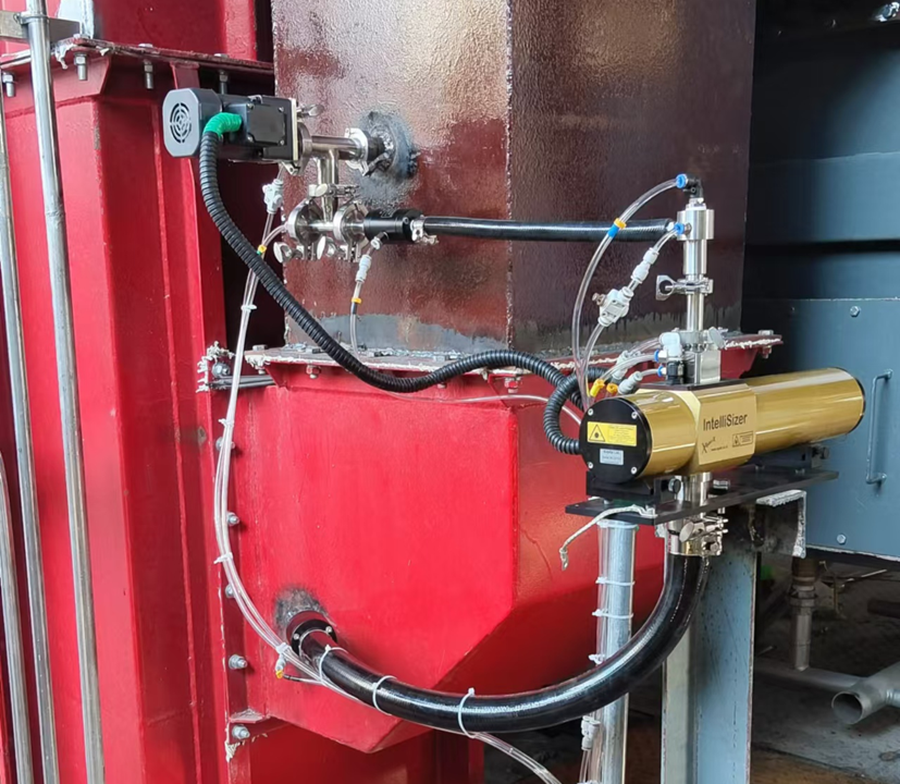
Xoptix provides continuous real-time particle size distribution measurement directly from the process. Instead of relying on occasional laboratory snapshots, operators receive a constantly updated view of grinding performance. This allows process changes to be identified immediately and corrective actions to be taken before quality deviations become significant.
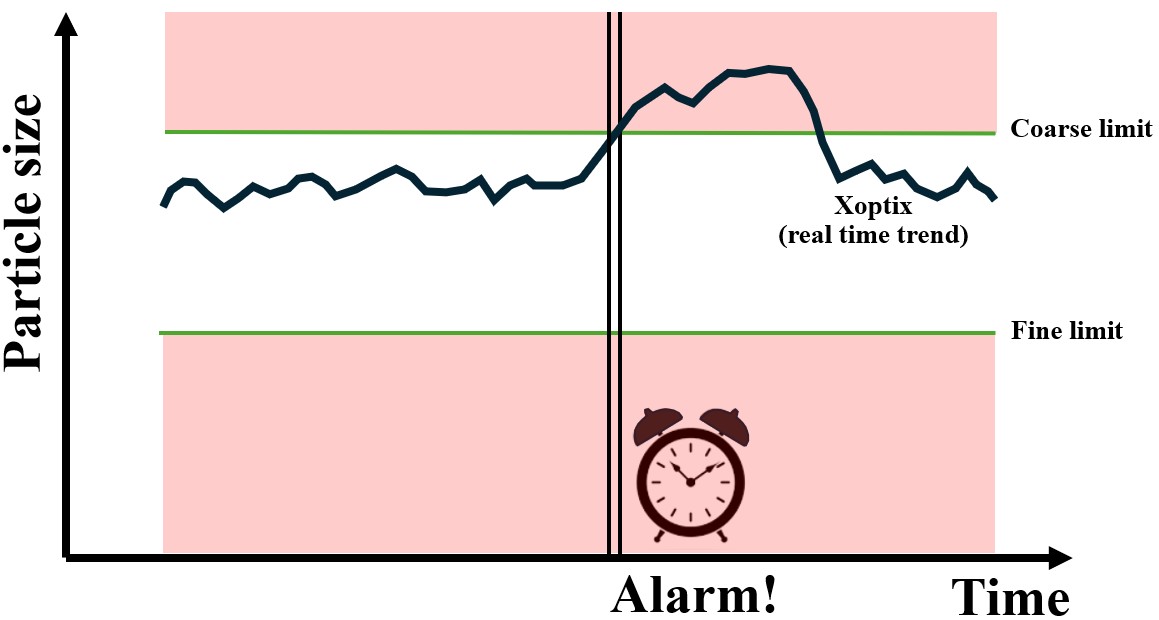
One of the most common problems in cement grinding is overgrinding. To avoid producing coarse cement, operators often run the mill conservatively and produce material finer than necessary. While this protects product quality, it also consumes additional energy and reduces mill capacity. Real-time PSD monitoring allows operation much closer to the coarse specification limit while maintaining confidence in product quality.
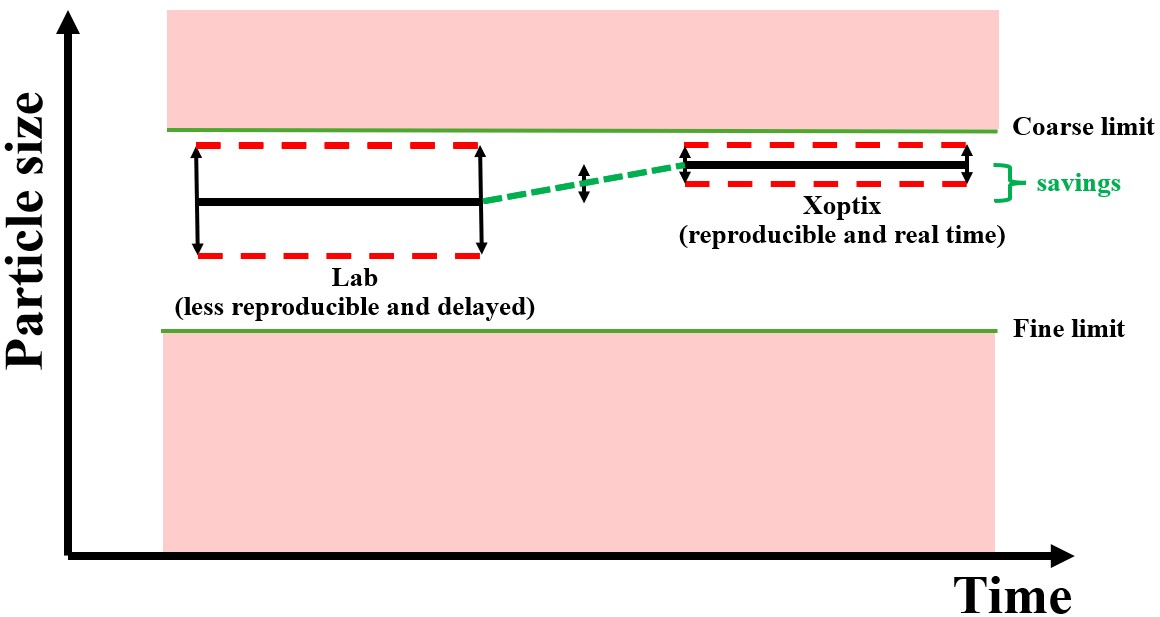
With better visibility of the actual particle size distribution, grinding circuits can often be operated at higher production rates. Operators no longer need to maintain large safety margins to compensate for measurement delays. As a result, mill throughput can frequently be increased while still meeting product quality requirements.
Grinding is typically the most energy-intensive process in a cement plant. Every tonne of material ground finer than required consumes unnecessary electrical energy. By reducing overgrinding and maintaining tighter control of particle size distribution, significant energy savings can be achieved while preserving product performance.
Real-time PSD data can be integrated directly into advanced process control systems. Xoptix measurements provide the critical feedback signal required for automatic adjustment of separator speed, mill feed rate, grinding pressure, and other process variables. This enables closed-loop control strategies that continuously optimise grinding performance.
Many cement producers achieve rapid return on investment through reduced product giveaway, lower energy consumption, increased throughput, and reduced laboratory workload. Additional savings are often realised during product changeovers, where real-time PSD information helps minimise the amount of off-specification material produced during transitions.
The combination of continuous PSD measurement, improved process understanding, and advanced automation support delivers substantial operational benefits. Cement producers can achieve more stable product quality, higher mill efficiency, lower operating costs, faster response to process changes, and greater confidence in day-to-day plant operation.