
Laser Diffraction
Laser Diffraction - robust particle size measurement technique
Laser diffraction is one of the most widely used methods for particle size measurement in industrial and laboratory applications. The technique determines particle size distribution (PSD) by analysing how particles scatter laser light. Because the method is fast, highly reproducible, and suitable for a very wide size range, it has become a standard technology in industries such as cement, minerals, chemicals, pharmaceuticals, food, and powders.

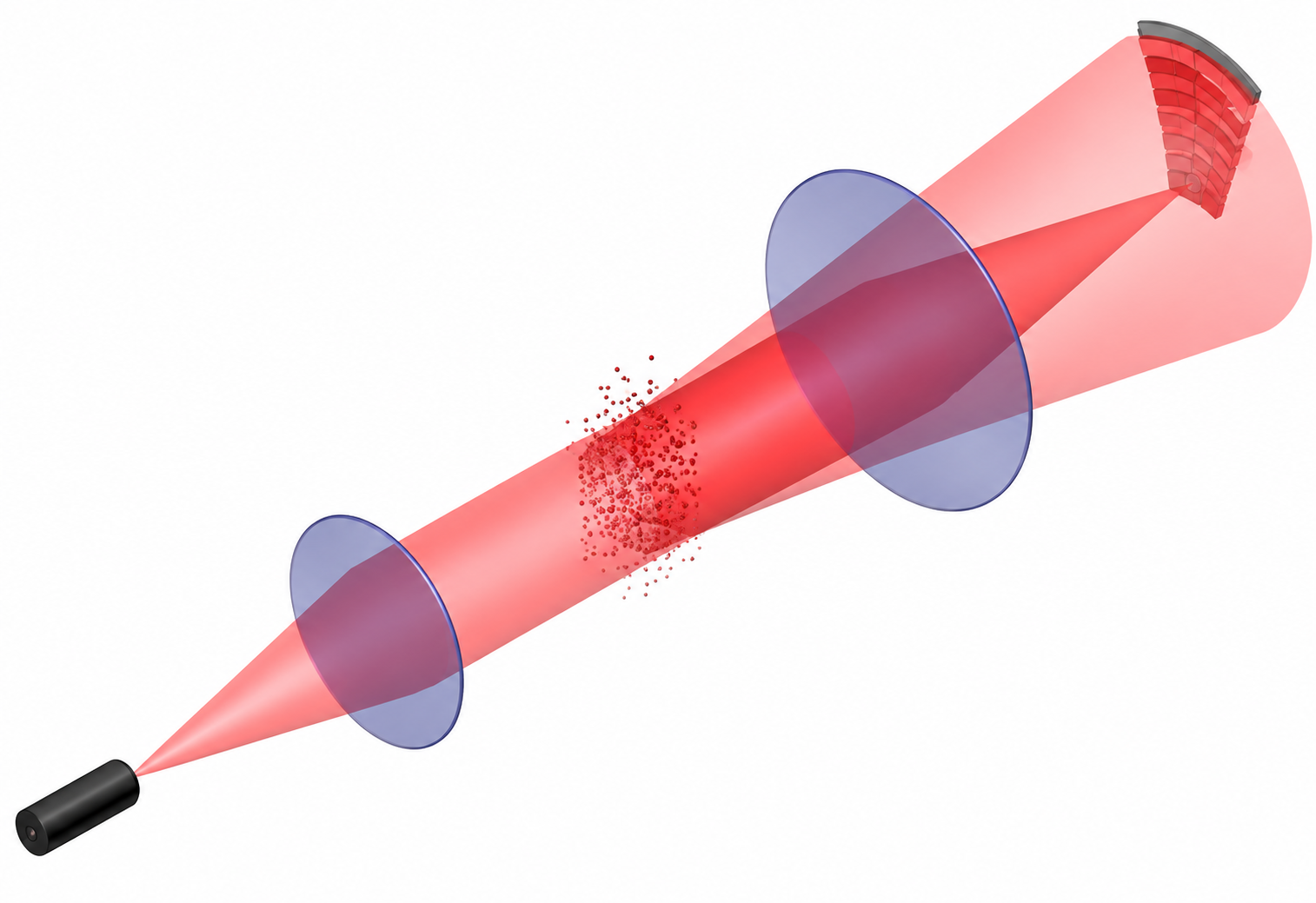
The basic principle of laser diffraction is simple: when a laser beam passes through a cloud of particles, the particles scatter light at different angles. Large particles scatter light mainly at small angles, while fine particles scatter light at wider angles. By measuring the intensity and angle of scattered light, the instrument can calculate complete particle size distribution of the sample.
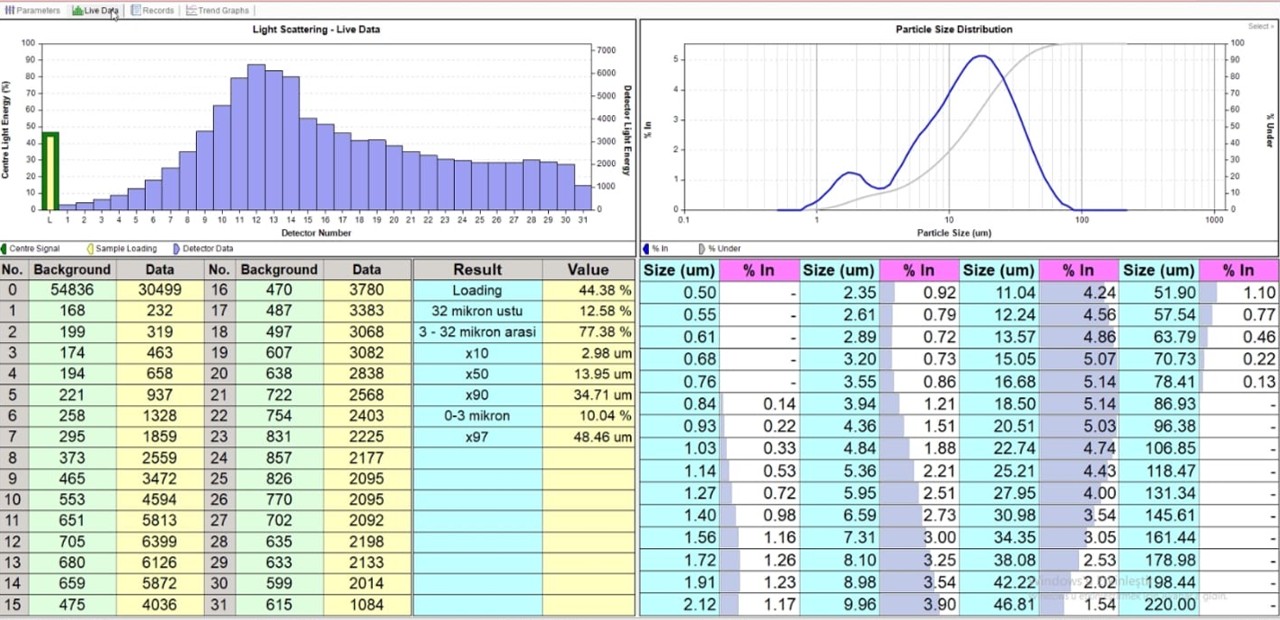
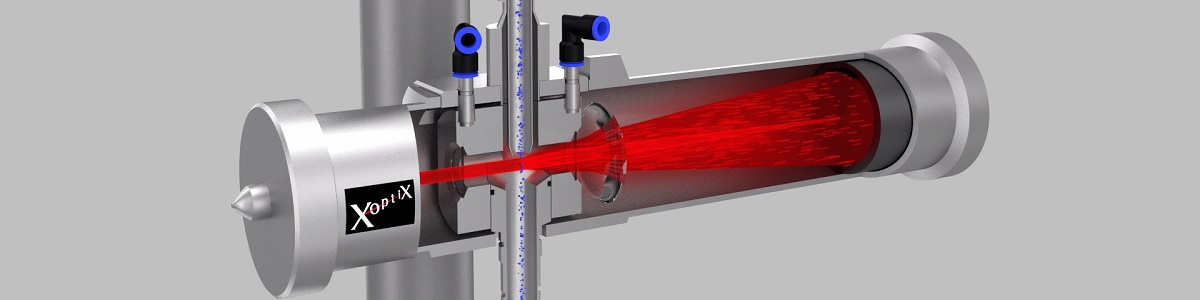
A laser diffraction system typically consists of a laser source, a sample dispersion system, measurement optics, and an array of photodetectors. The sample is dispersed either in air (dry measurement) or liquid (wet measurement) and passes through the laser beam. The scattered light pattern is collected by detectors positioned at multiple angles around the measurement zone.

Direct Fourier optics geometry offers significant advantages for industrial inline particle size measurement because it uses a simple, robust optical configuration with no moving mechanical components inside the measurement zone. The scattered light is measured directly in the Fourier plane, allowing stable operation even under vibration, dust, temperature fluctuations, and harsh process conditions commonly found in industrial grinding environments. Compared to more sensitive laboratory-style optical arrangements, direct Fourier geometry provides higher mechanical stability, easier alignment, lower maintenance requirements, and improved long-term reproducibility, making it especially suitable for continuous 24/7 online process monitoring.
The mathematical calculation behind laser diffraction is based mainly on Mie theory or Fraunhofer diffraction theory. Fraunhofer theory is simpler and often suitable for larger particles, while Mie theory provides more accurate results for fine particles and requires knowledge of the particle refractive index. Modern laser diffraction analysers automatically process this complex scattering information and convert it into a complete particle size distribution curve.
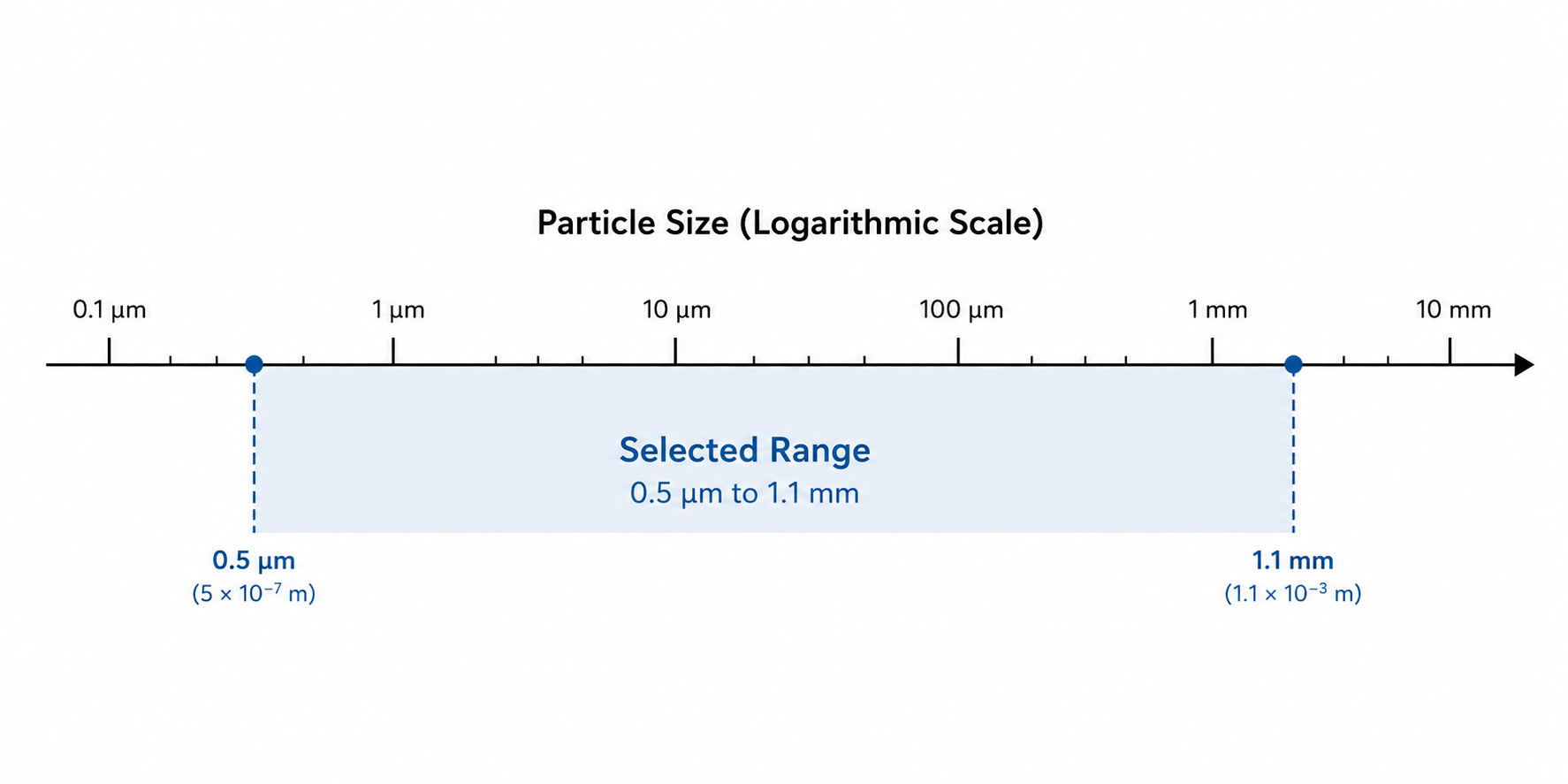
One major advantage of laser diffraction is its extremely wide measurement range. A single instrument can often measure particles from submicron sizes up to several millimeters. This allows the same technology to be used for ultrafine powders, cement, minerals, pigments, coal, pharmaceuticals, and many other industrial materials.
Another important advantage is measurement speed. Traditional laboratory sieve or sedimentation methods can take many minutes or even hours, while laser diffraction typically provides a complete PSD result within seconds. This speed makes the technology highly suitable for real-time process monitoring and automated process control applications.
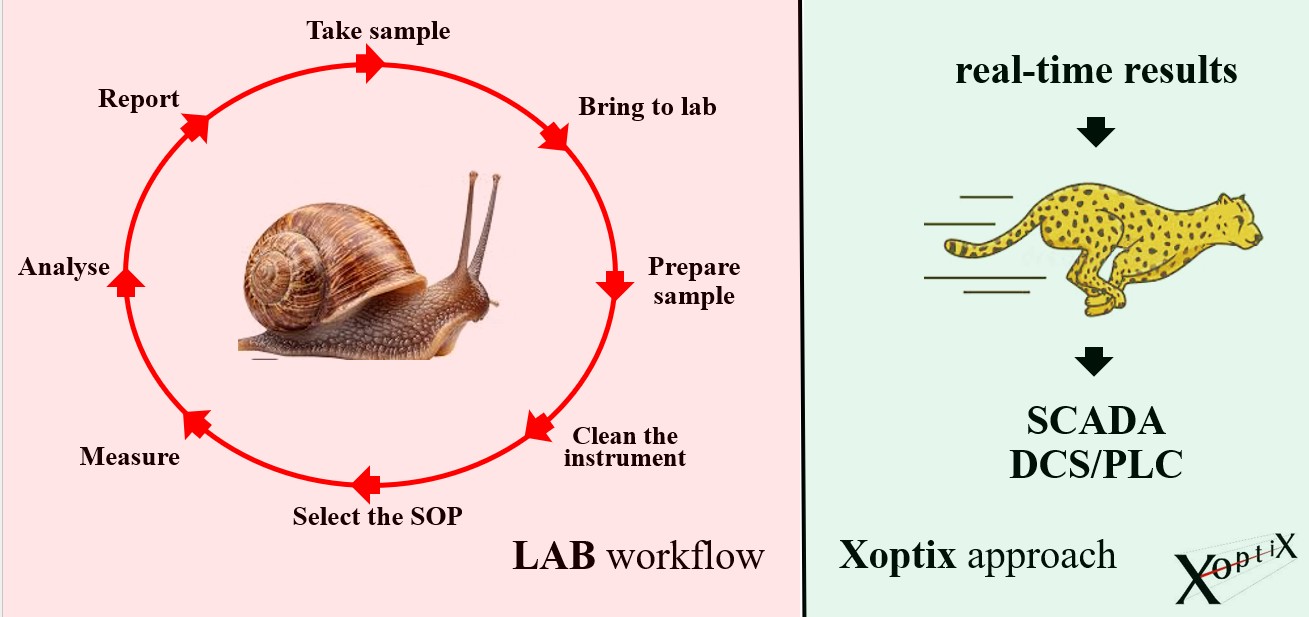
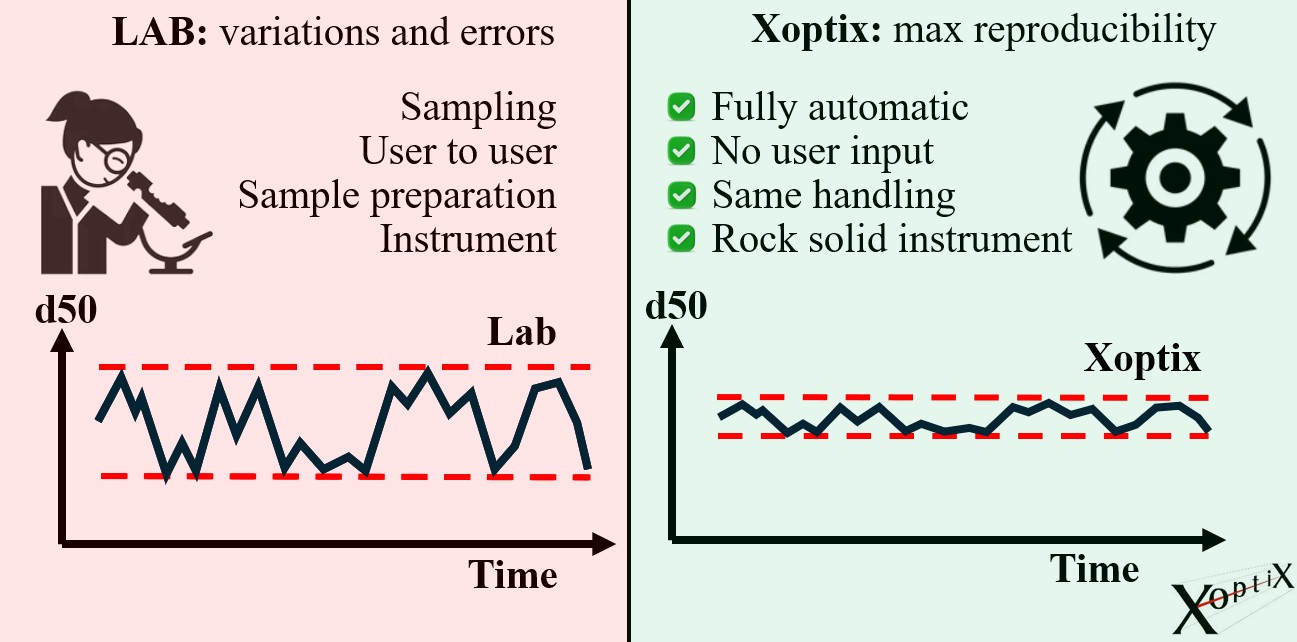
Reproducibility is also a key strength of laser diffraction. Because measurements are automatic and based on optical principles, operator influence is minimized compared to manual laboratory methods. Stable and reproducible PSD data is essential for process optimisation, especially in grinding and classification circuits where even small particle size variations can significantly affect product quality and energy consumption.
Proper sample dispersion is critical for accurate laser diffraction measurements. Agglomerated particles must be separated before entering the measurement zone, otherwise the instrument may interpret clusters as large particles. In dry systems, compressed air and venturi dispersers are often used, while wet systems may use ultrasonic treatment or chemical dispersants to ensure proper particle separation.
In industrial inline systems, laser diffraction can be integrated directly into the production process to provide continuous real-time particle size monitoring. Inline analysers continuously measure PSD without manual sampling, allowing operators or automatic control systems to immediately respond to process changes. This forms the basis for advanced process control, unmanned operation, Industry 4.0 integration, and energy optimisation.
Today, laser diffraction is considered one of the most reliable and efficient technologies for particle size analysis. Its combination of speed, wide measurement range, high reproducibility, and suitability for automation makes it an essential tool for both laboratory quality control and modern process optimisation across many industries.
At Xoptix, the focus extends beyond the particle sizer itself. We engineer complete integrated process solutions, combining robust hardware, intelligent software, process understanding, and long-term support into one compact and easy-to-use system. The result is a rugged, high-performance inline particle sizing solution that delivers exceptional value at a fraction of the cost of many traditional technologies.