
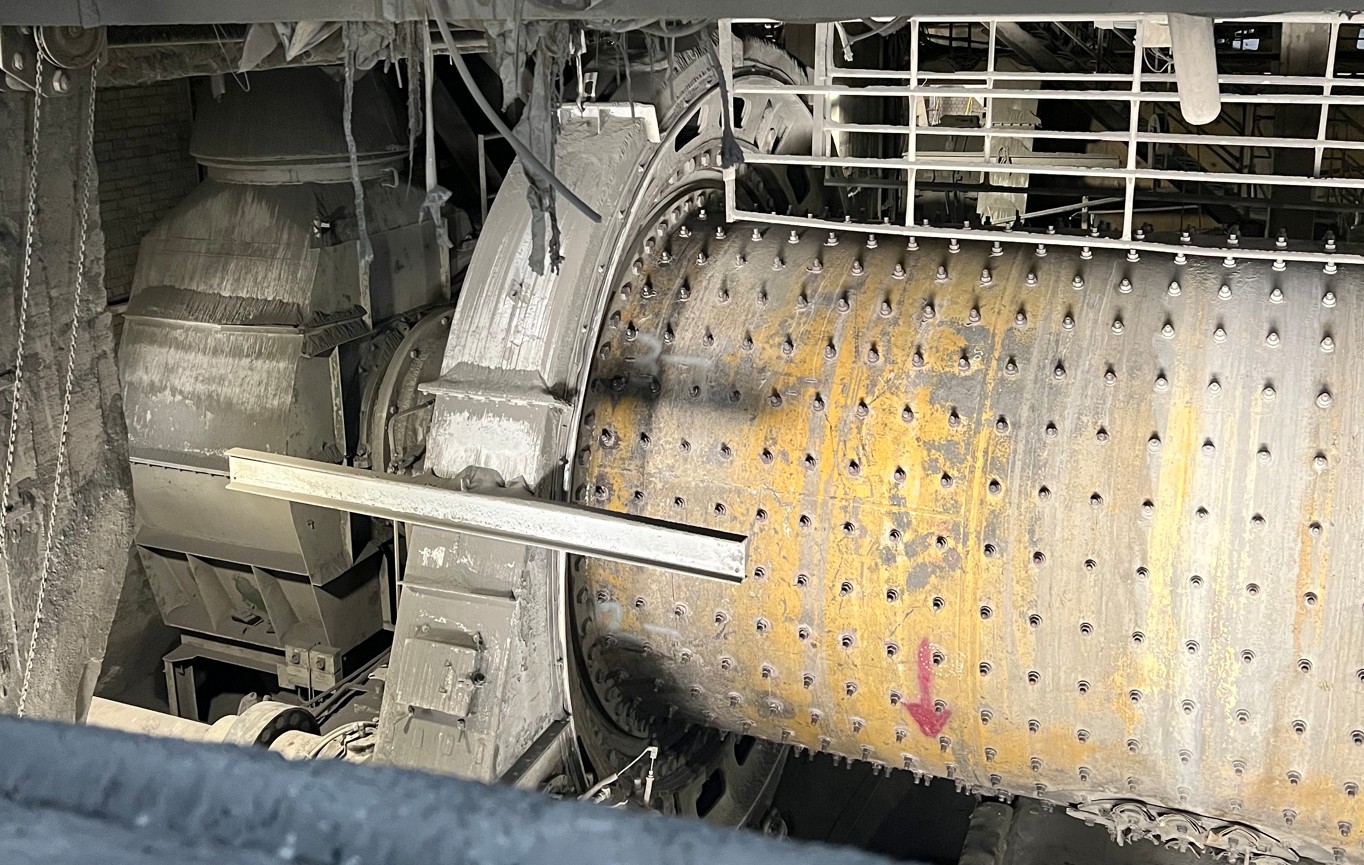
Raw Meal Mill
Raw meal grinding
Raw meal grinding is one of the most critical stages in cement manufacturing, as it prepares the kiln feed that ultimately determines clinker quality and kiln performance. The particle size distribution of the raw meal influences drying efficiency, calcination behaviour, heat transfer, and the overall stability of the pyroprocessing system. Consistent raw meal fineness is essential for maintaining predictable kiln operation and achieving uniform clinker quality.

Maintaining a stable raw meal particle size distribution can be challenging due to variations in raw material hardness, moisture content, and composition. Changes in quarry feed, grinding conditions, separator performance, and mill operating parameters can all affect the final product. Without continuous visibility of the grinding process, operators often have limited information about actual mill performance between laboratory measurements.
Traditional raw meal fineness control typically relies on periodic sieve analysis and laboratory testing. While these measurements provide useful quality information, they are performed at relatively infrequent intervals and only represent isolated snapshots of process performance. By the time laboratory results become available, significant quantities of material may already have been produced outside the desired specification.
For many cement producers, one of the key benefits of online particle size measurement is the elimination of routine manual sampling and laboratory analysis. Conventional testing requires personnel to collect samples, transport them to the laboratory, perform fineness measurements, and communicate the results back to operations. This process is labour-intensive and inherently delayed. Continuous online PSD measurement removes these delays while providing real-time information directly from the process.
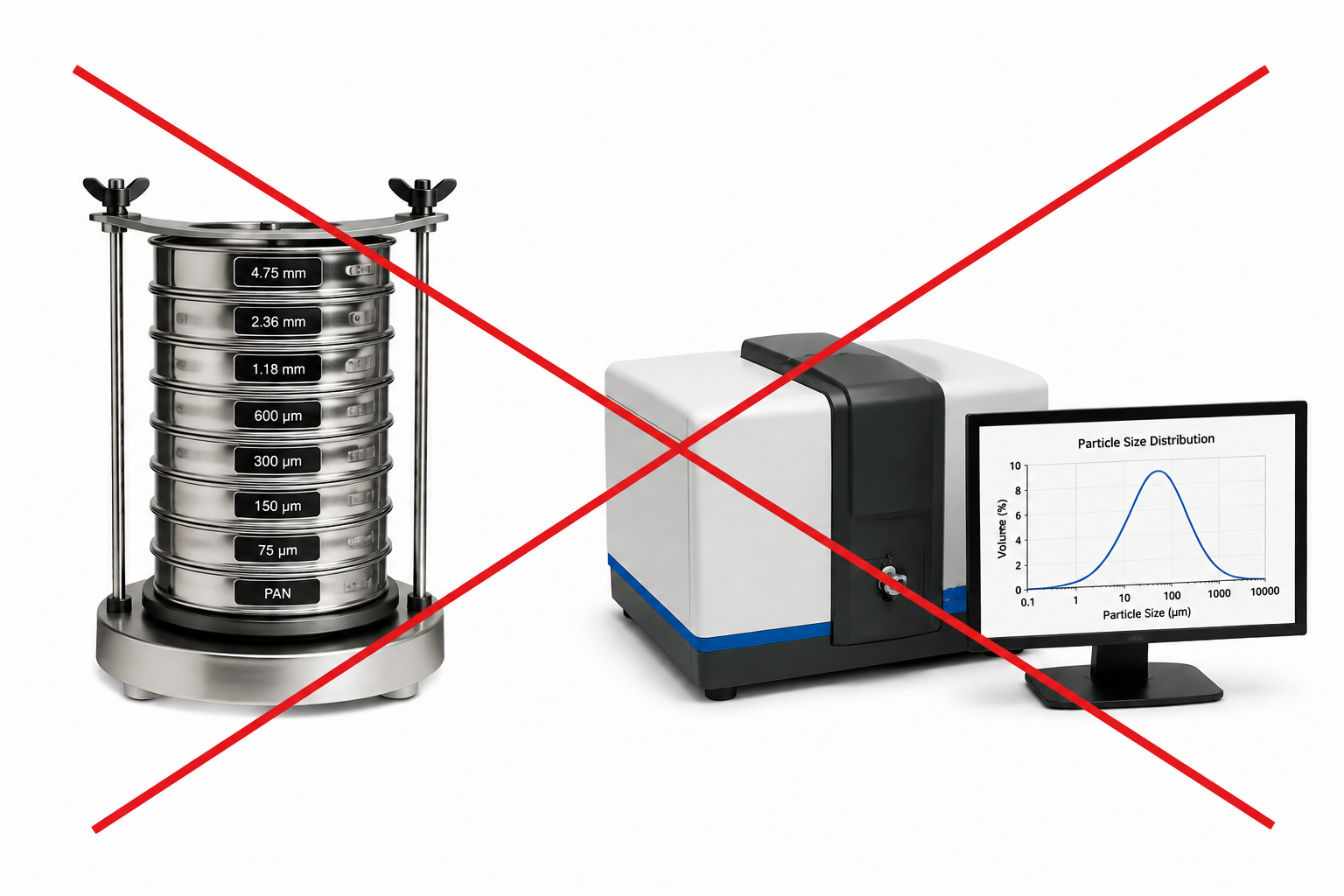
Xoptix provides continuous real-time particle size distribution measurement from the raw meal grinding circuit. Operators gain immediate visibility of product fineness and can identify process changes as they occur. This enables faster corrective action, improved process understanding, and more stable operation of both the mill and the downstream kiln process.
One of the most common operational challenges is balancing product quality with mill throughput and energy consumption. To avoid producing coarse material, mills are often operated conservatively, resulting in unnecessary overgrinding. While this protects quality, it increases electrical energy consumption and limits production capacity. Real-time PSD monitoring allows operation closer to the optimum specification limit while maintaining confidence in product quality.
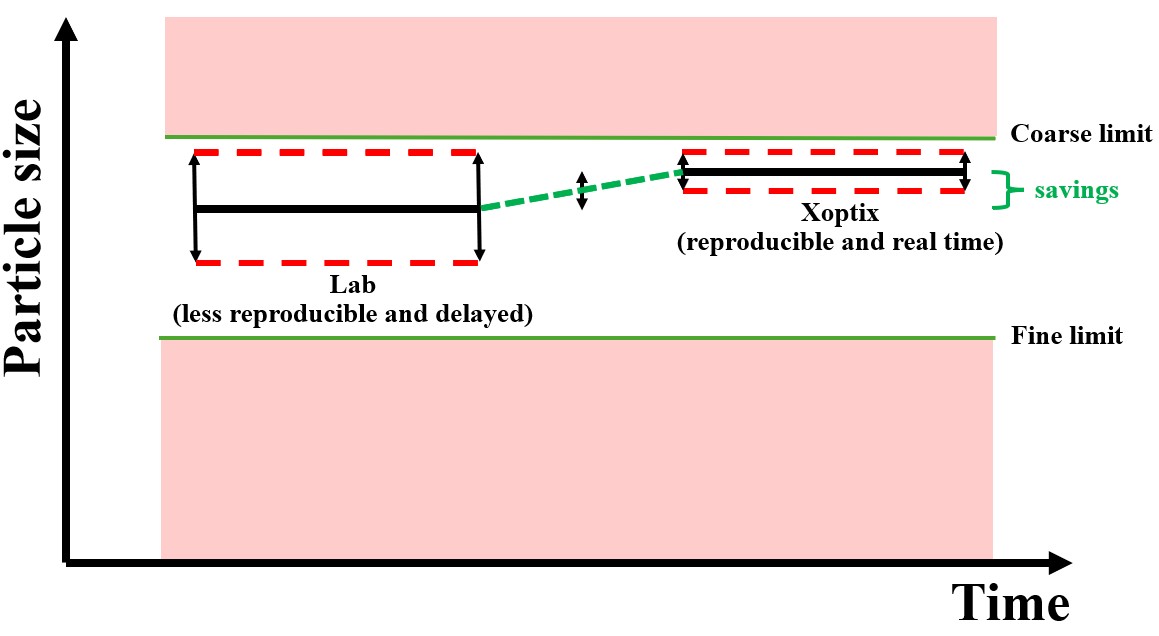
With continuous feedback on actual particle size distribution, raw meal grinding circuits can often operate at higher throughput while maintaining target fineness. Improved process visibility reduces the need for large operating safety margins and helps operators respond more effectively to changing raw material characteristics. The result is increased mill efficiency, reduced variability, and more stable kiln feed quality.
Real-time PSD data can be integrated directly into advanced process control systems, providing a continuous feedback signal for optimisation of separator speed, mill feed rate, grinding pressure, airflow, and other critical process variables. The combination of continuous measurement, improved process understanding, and advanced automation helps cement producers achieve more consistent raw meal quality, increased mill throughput, lower energy consumption, reduced laboratory workload, and greater confidence in day-to-day plant operation.
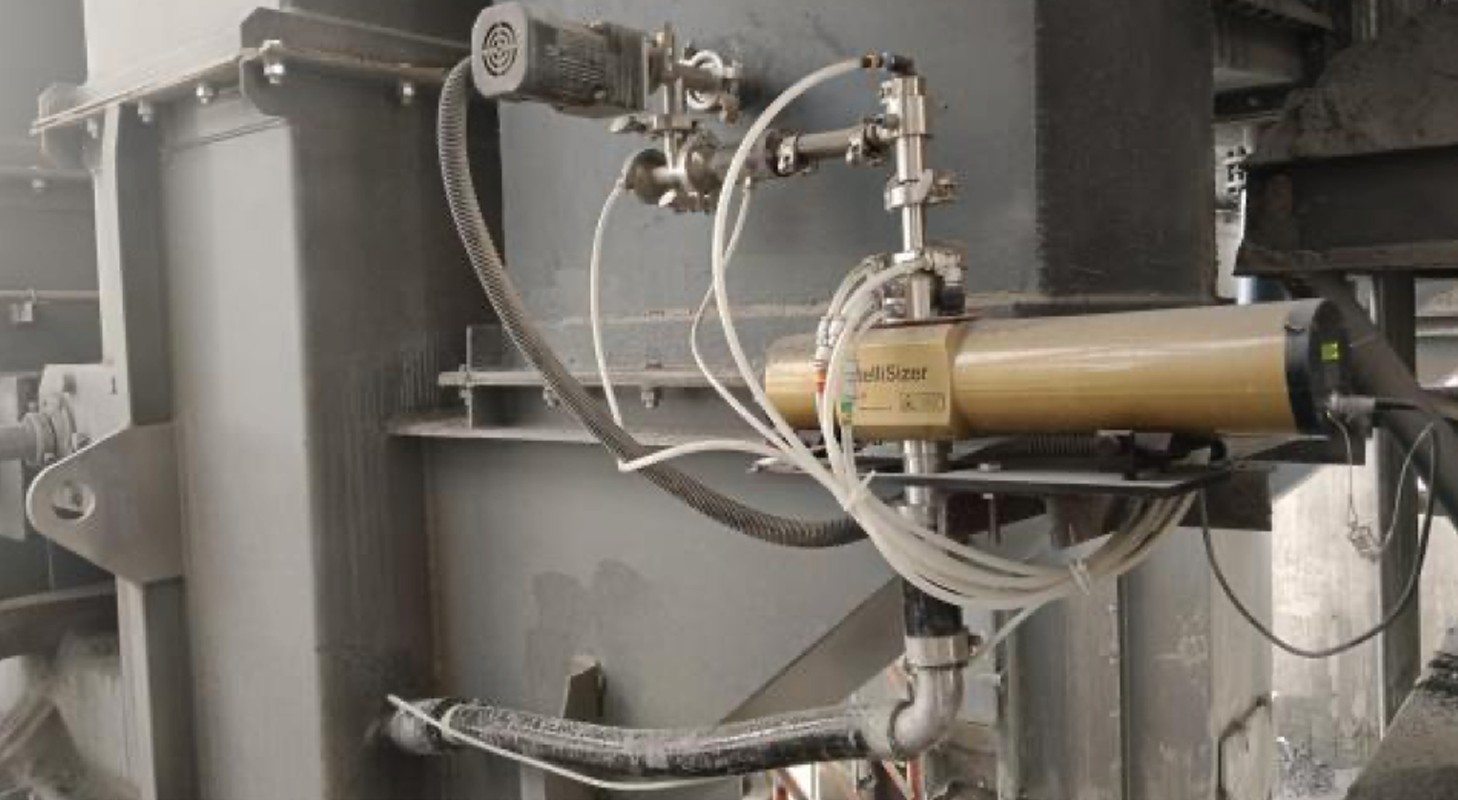
Lunan China United Cement Co is saying:
By deploying online particle size analyzers across multiple key production lines, our company has successfully upgraded from the traditional mode of manual intermittent sampling and testing to a fully automated, continuous real-time monitoring mode. This change has significantly reduced the frequency of manual testing in each process. While effectively alleviating the workload of laboratory personnel, it fundamentally avoids potential quality fluctuations caused by delays in manual testing and sampling deviations. As a result, the particle size consistency of raw meal has been continuously improved, laying a solid foundation for the stable operation of the kiln and grinding systems.