
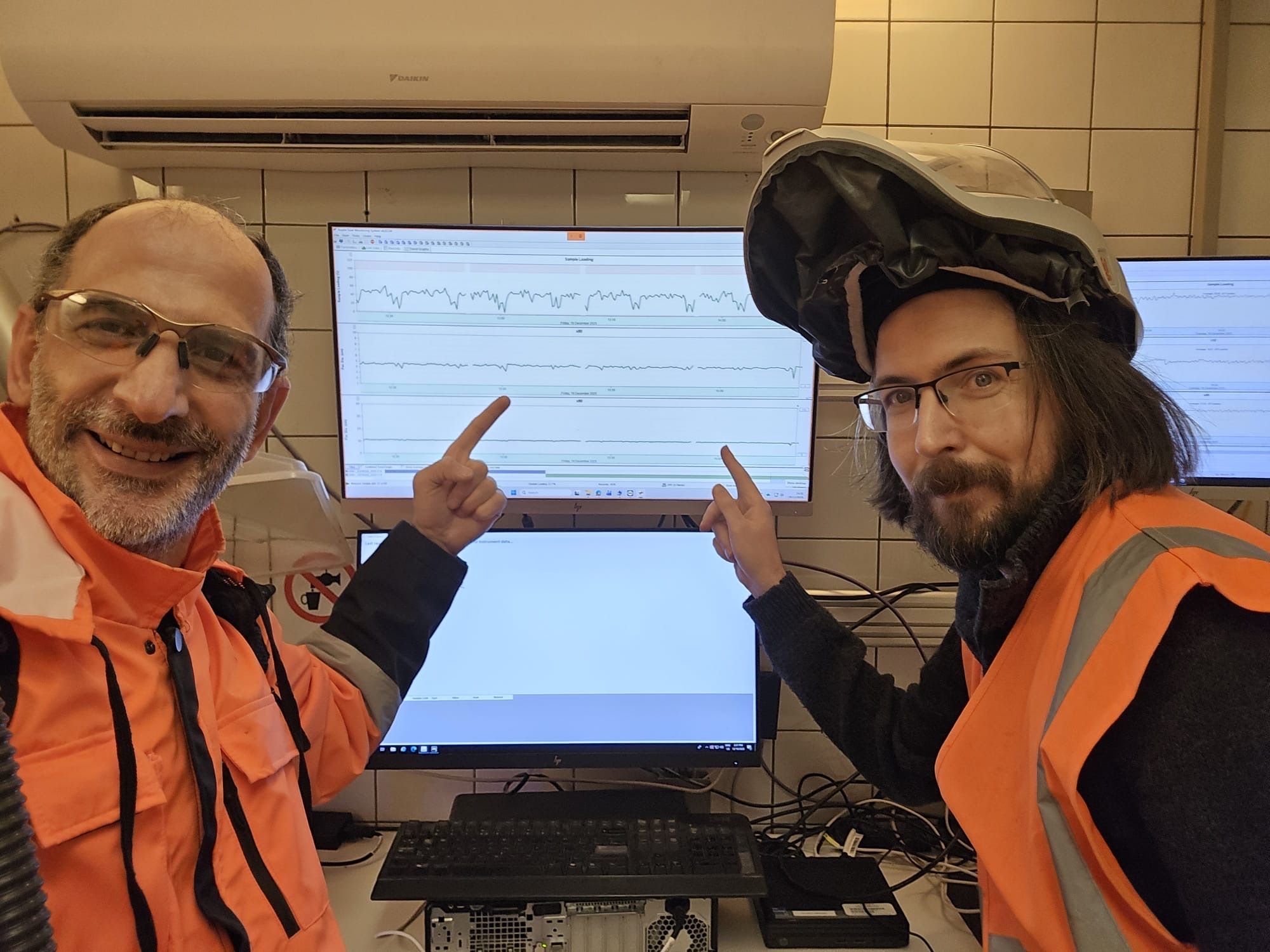
PSD as a Setpoint
Case IV. Online PSD as a setpoint in a control loop
Closed-loop control with PID or APC transforms particle size measurement from a monitoring tool into an active process control signal. Real-time PSD data from Xoptix is continuously sent to the plant DCS or PLC, where the controller automatically adjusts separator speed and other process parameters to maintain the desired particle size target. Instead of operators manually reacting to delayed laboratory results, the grinding circuit continuously corrects itself in real time.
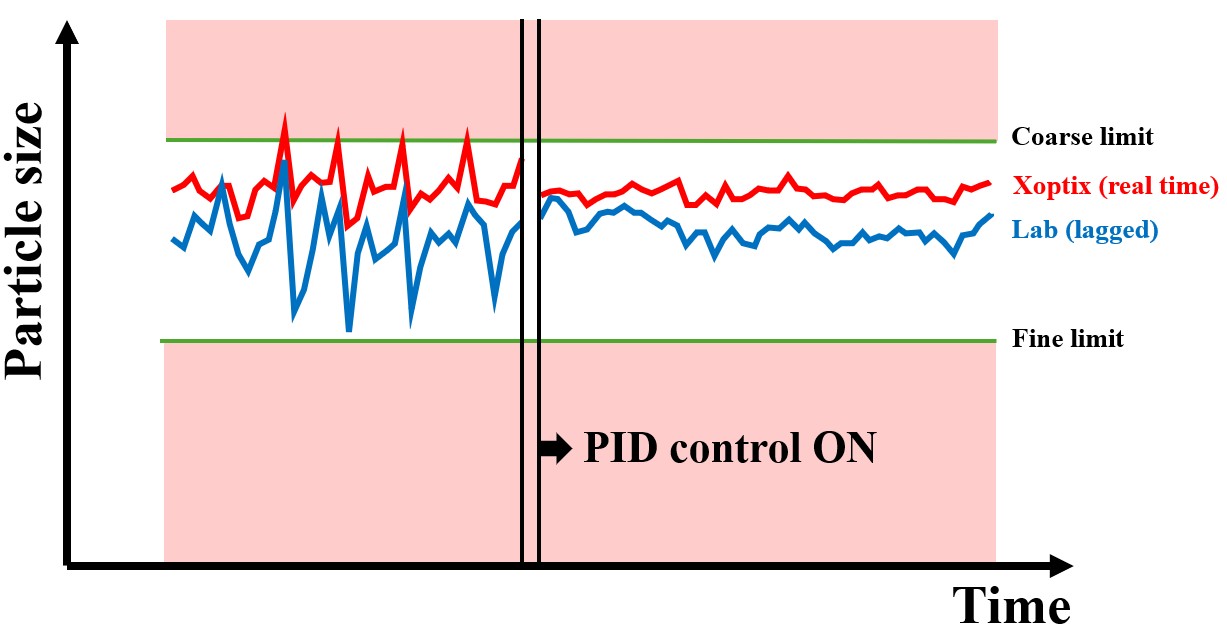
Because the feedback signal is both real time and highly reproducible, PSD variation can be dramatically reduced compared to traditional laboratory-based control. Stable particle size means more stable product quality, lower process variability, and more predictable downstream performance. The process remains continuously centred around the target PSD, reducing disturbances and minimising the production of off-spec material.
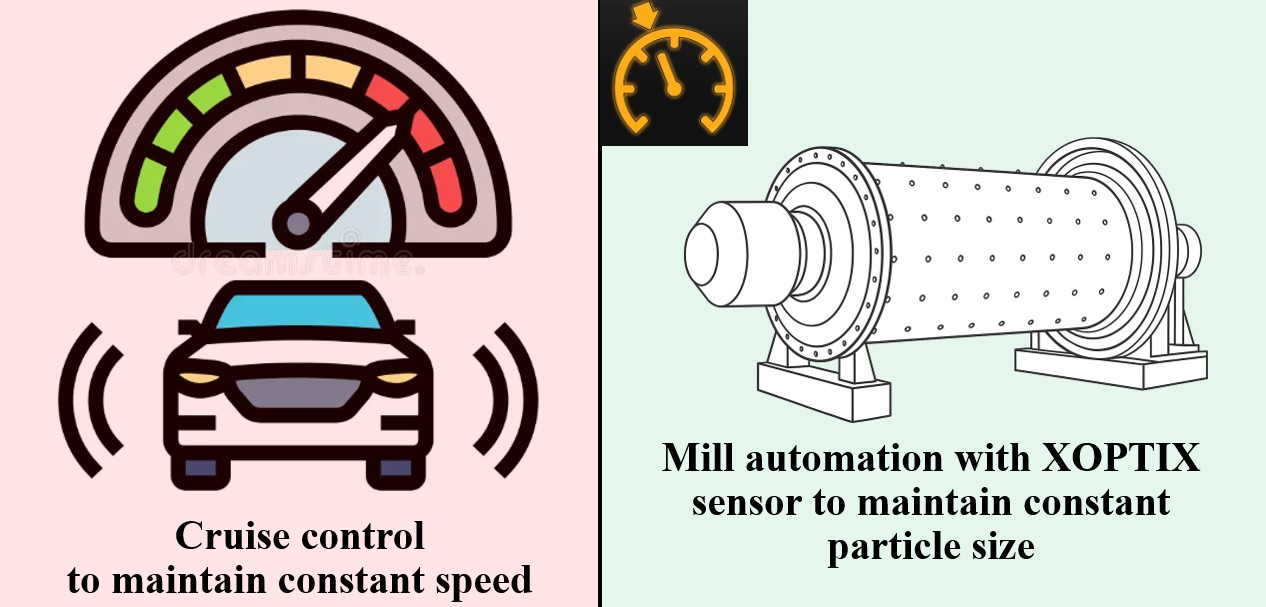
The concept is similar to cruise control in a car. A driver cannot maintain perfectly constant speed manually because road conditions continuously change. Cruise control constantly measures speed and automatically adjusts engine power to remain on target. In the same way, Xoptix acts as the “speed sensor” of the grinding circuit, continuously measuring PSD and automatically adjusting the process to maintain constant product quality.
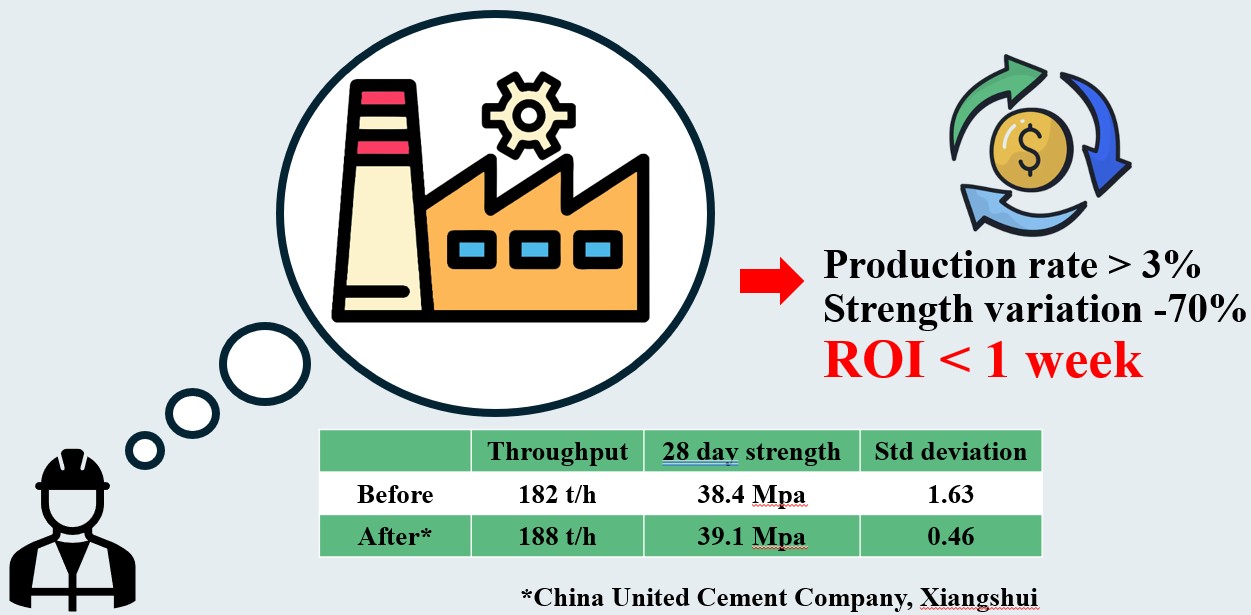
One industrial cement installation demonstrated the benefits of automated PSD control using Xoptix. After implementation, production throughput increased from 182 t/h to 188 t/h while the standard deviation of 28-day cement strength decreased from 1.63 to 0.46. In another ROI example, production increase exceeded 3% while strength variation was reduced by 70%, resulting in a reported ROI of less than one week.