
Wet Sample Cell
Wet sample cell
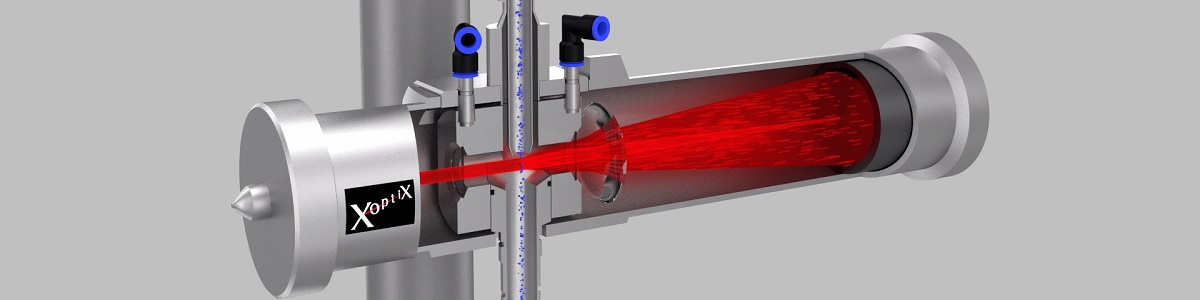
A wet measurement cell is designed for continuous online particle size analysis of slurries, suspensions, and liquid process streams. In this configuration, the sample flows through a specially designed liquid measurement chamber where particles pass through the laser beam while remaining fully dispersed in the carrier liquid. As the particles cross the optical path, they scatter light and generate the laser diffraction pattern used for real-time PSD calculation.
One of the key challenges of wet measurement is maintaining stable dispersion of particles inside the liquid flow. Agglomeration, sedimentation, air bubbles, or unstable flow conditions can strongly affect measurement quality. Xoptix wet cells are therefore carefully engineered to provide controlled flow conditions, stable hydraulic design, and consistent particle presentation within the optical measurement zone.
The optical windows of the wet cell are continuously protected and cleaned by the liquid flow itself, while additional flushing and cleaning options can be integrated for difficult applications. Depending on the process requirements, the system may also include recirculation loops, automatic flushing cycles, dilution systems, pressure regulation, and controlled bypass arrangements to ensure stable long-term operation in industrial environments.
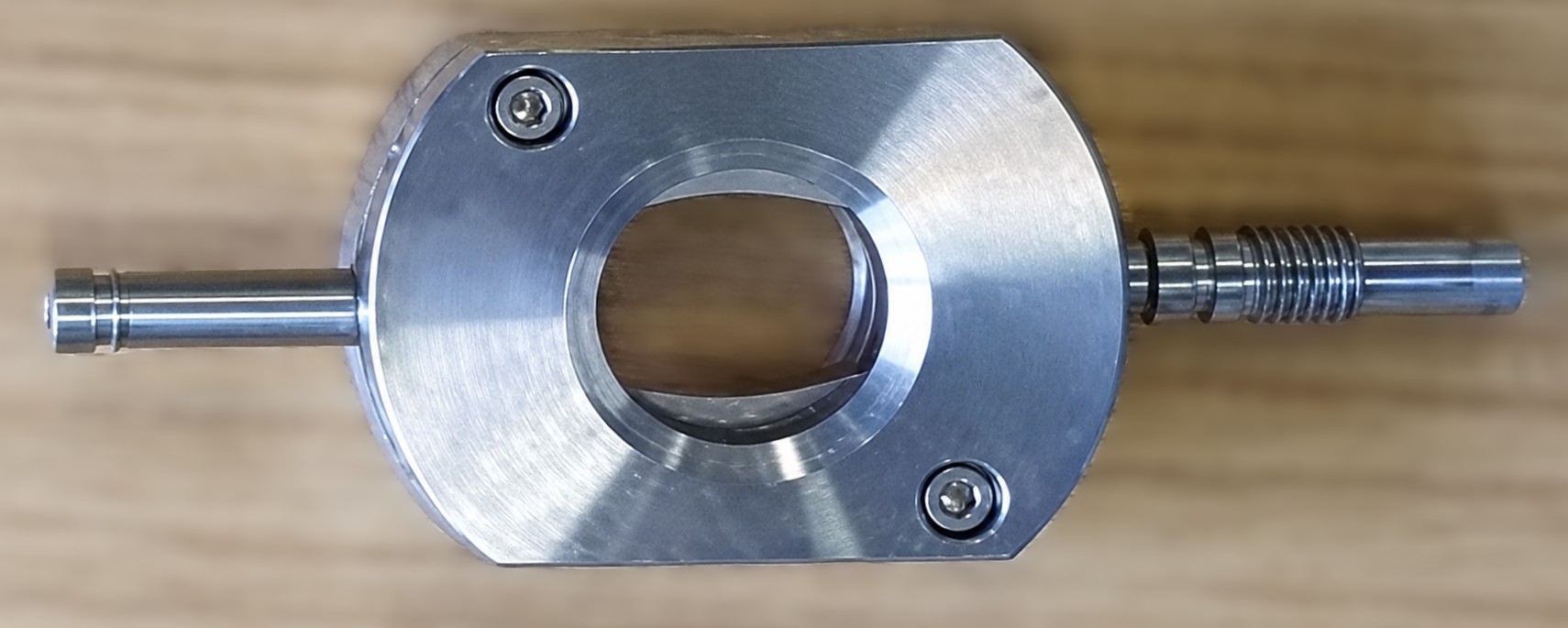
Because slurry samples typically produce very high optical attenuation, the wet measurement cell usually operates with a very narrow optical gap between the windows. Even when the process stream is diluted, liquid suspensions often scatter and absorb far more light than dry powder systems. A narrow measurement path therefore helps maintain sufficient laser transmission through the sample while still generating a stable and measurable diffraction pattern. Careful optimisation of the gap width is essential to achieve reliable PSD measurement without excessive attenuation or loss of signal quality.
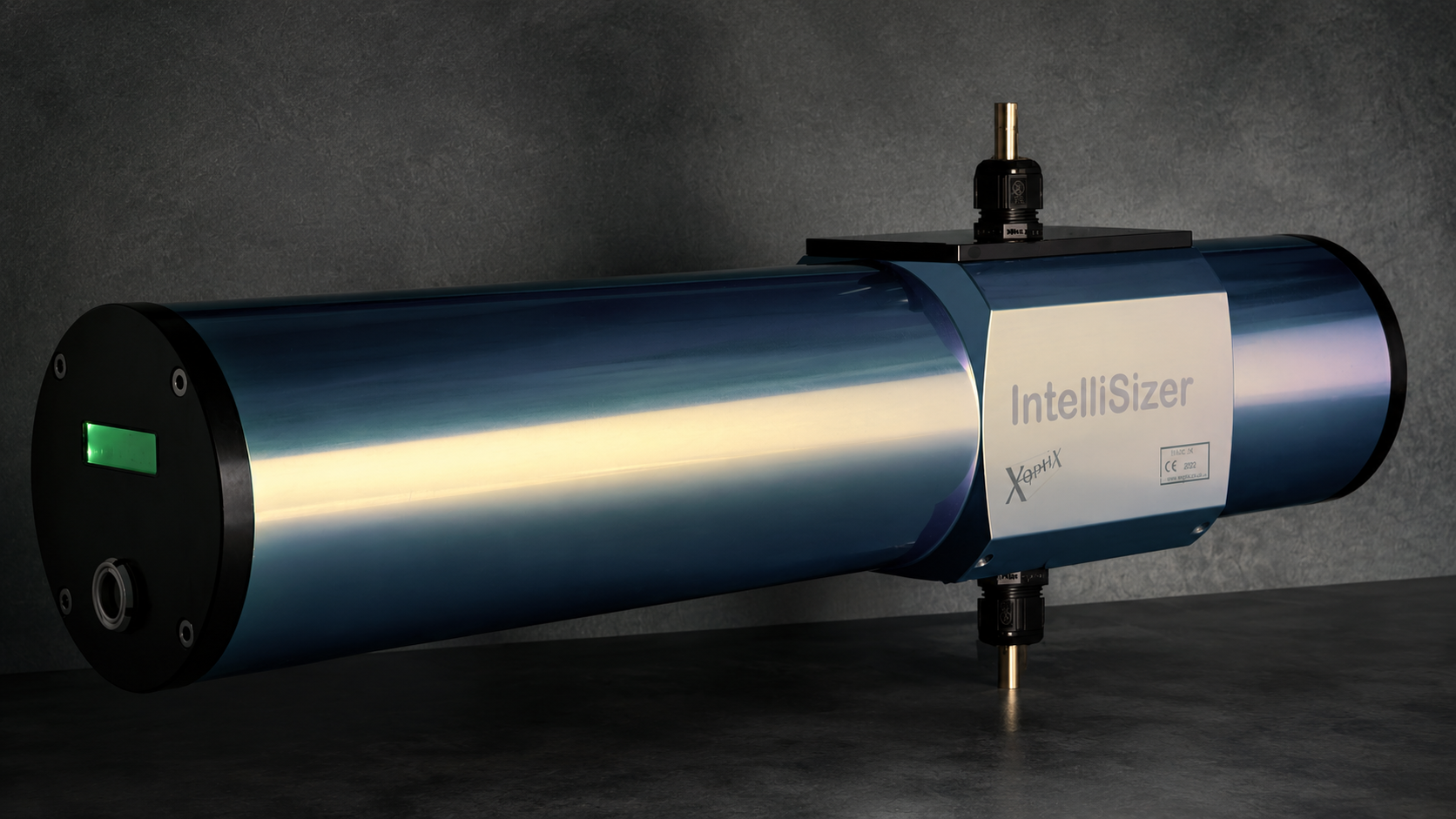
Wet online particle sizing is especially valuable in industries such as minerals processing, flotation, pigments, chemicals, battery materials, and pharmaceuticals, where particle size directly influences reaction kinetics, filtration behaviour, product quality, and process efficiency. By providing continuous real-time PSD trends, the wet cell allows operators and APC systems to immediately react to process changes and maintain stable product quality without relying solely on delayed laboratory analysis.